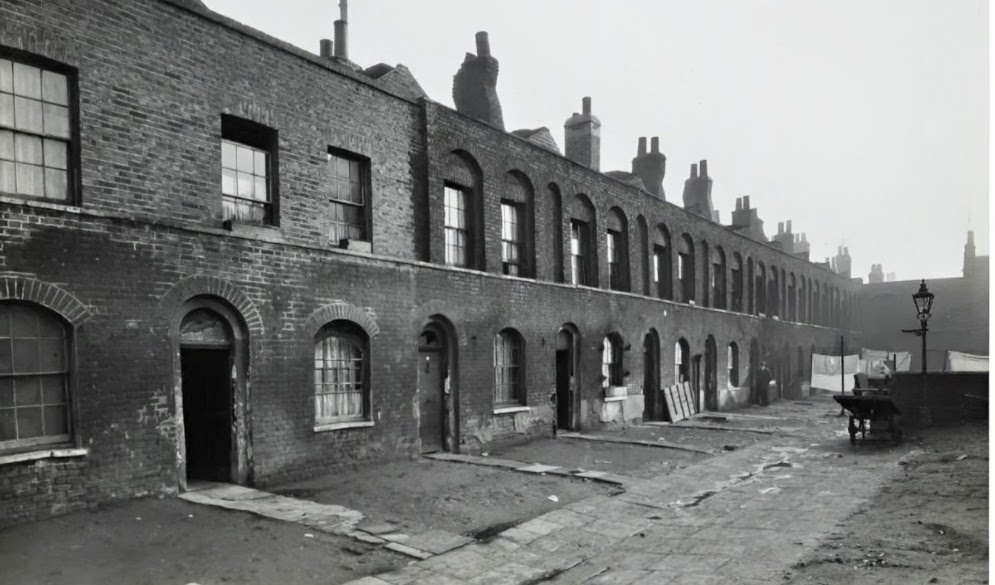
In the early 1800s, Somers Town sat beside one of London’s most unusual landmarks: the huge dustheaps at Battle Bridge, now King’s Cross.
These weren’t just piles of ash. They were great mounds of everyday rubbish — soot, broken pottery, old boots, rags, bones, and all the sweepings of the streets. including demised cats and horse dung.
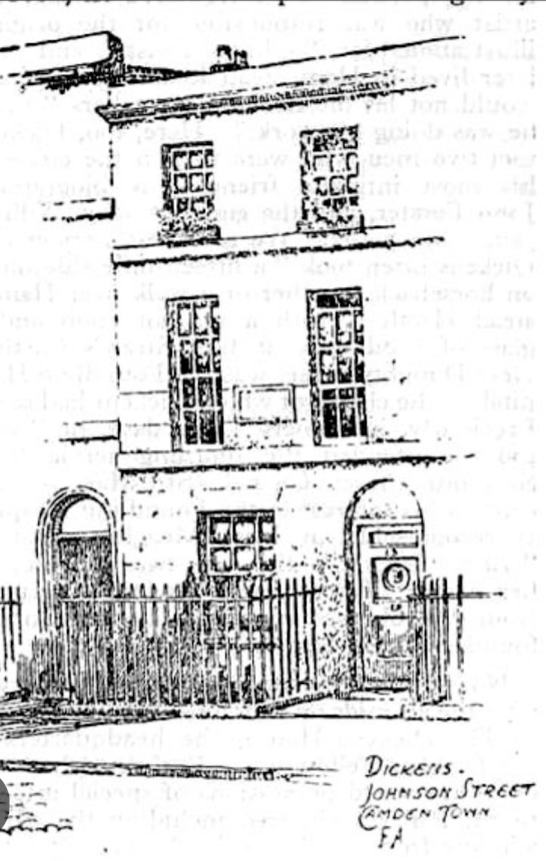
When Charles Dickens moved with his family to 29 Johnson Street (now Cranleigh Street) at fourteen, Somers Town became the backdrop to his daily life. The area, still rough around the edges, made a deep and lasting impression on him.
29 Johnson Street
Dickens loved wandering the streets and watching the people who lived and worked there. Somers Town’s characters, its noise, its poverty, and its energy all fed his imagination. Many of the personalities he later wrote about had their roots in these very streets.
The dustheaps especially fascinated him. They were busy, smelly, noisy places where men, women, and children sorted through London’s waste in the hope of earning a living.
Almost nothing was thrown away. Ash went into brick‑making. Bones became glue and fertiliser. Rags were turned into paper. Metal was melted down and reused. Even broken pottery was crushed for new materials.
For the poorest families, picking through the heaps meant survival. Some hoped to find a lost coin or a scrap worth selling. Others simply needed the day’s pay.

These sights stayed with Dickens. Years later, he turned the dustheaps into a powerful symbol in Our Mutual Friend, where a fortune rises out of the rubbish through the “Golden Dustman”, Nicodemus Boffin.
The real dustheaps of Somers Town were just as striking — dirty, lively, and full of stories. Dickens saw in them the mix of hardship and hope that shaped the lives of so many Londoners.
Even in the filthiest corners of the city, he found the beginnings of the characters and tales that would make him famous.
Related Posts
Audio Book of Somers Town Girl – Coming Soon🎧
🎧 We’re thrilled to announce that 'A Somers Town Girl'…