
Precious Memories
Every summer, a cherished tradition united families from Somers Town and across London. They packed up their bedding and belongings, boarded trains and lorries, and travelled to the hop fields of Kent.
For six wonderful weeks, the city faded behind them, and the open countryside unfolded ahead, promising a rare, cherished escape. It was a special time for families to gather together and create wonderful memories.
When they arrived, families poured from the trains onto the bustling platform, alive with the sounds of children’s laughter, lively conversations, and the clatter of bedding and saucepans.
Some pushed their belongings on handcarts, while others wheeled babies in prams piled high with bundles—the little ones gazing curiously over the top, taking in this new world unfolding before them.
From there, they changed to other modes of transport—often a horse and cart or a tractor with a farmer-supplied trailer. If the farm were close by, they would walk.
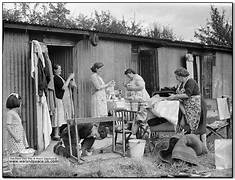
Women set to work to transform the huts into cosy homes.
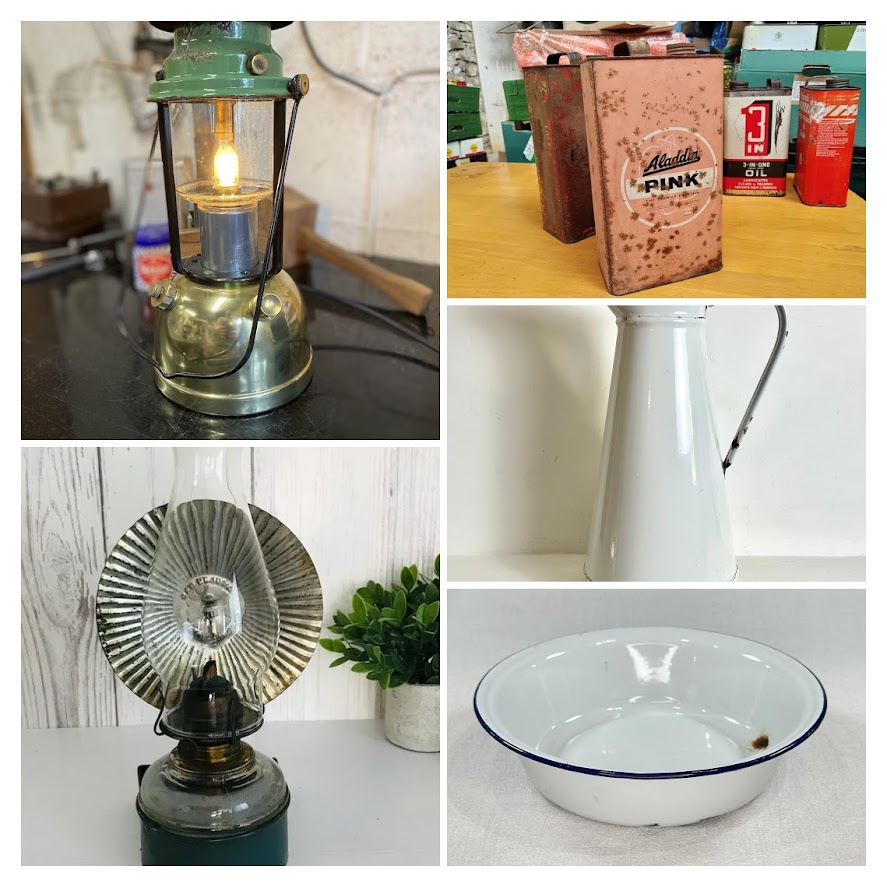
The items below were essential for everyday life: a Tilley lamp, a paraffin lamp, a white enamel jug & bowl.
When they reached the common, the huts stood in rows, built from wood, bricks, or tin. They made their way to their own hut, where the women immediately began working—sweeping floors, organising spaces, and making beds. The mattresses were plain ticking covers filled with straw, supplied by the farmer.
Before long, the huts had been transformed into cosy, welcoming homes, and families unpacked their belongings and set up makeshift kitchens. Then it was time to go and say hello to all their hopping friends from previous years. To catch up on who had got married, had a baby, started work, and all the other happenings in life. Children ran around excitedly, eager to reconnect with playmates from years past.
Days in the Hop Fields
Workdays began at dawn, but no one ever complained. There was a special kind of magic in those early hours. A morning mist drifted over the common like a ghostly veil, swirling gently with every step. Children raced through the fog, hiding and playing, turning the scene into something truly enchanting.
Families walked together to the hop fields, carrying sandwiches, tea, sugar, milk, a kettle, cups, and, of course, a small meths stove to boil the water.
As the first bines were pulled, a shower of overnight dew soaked you. But as the morning advanced, the sun rose higher, casting its warmth and soft light, which filtered gently through the leafy rows of hops.
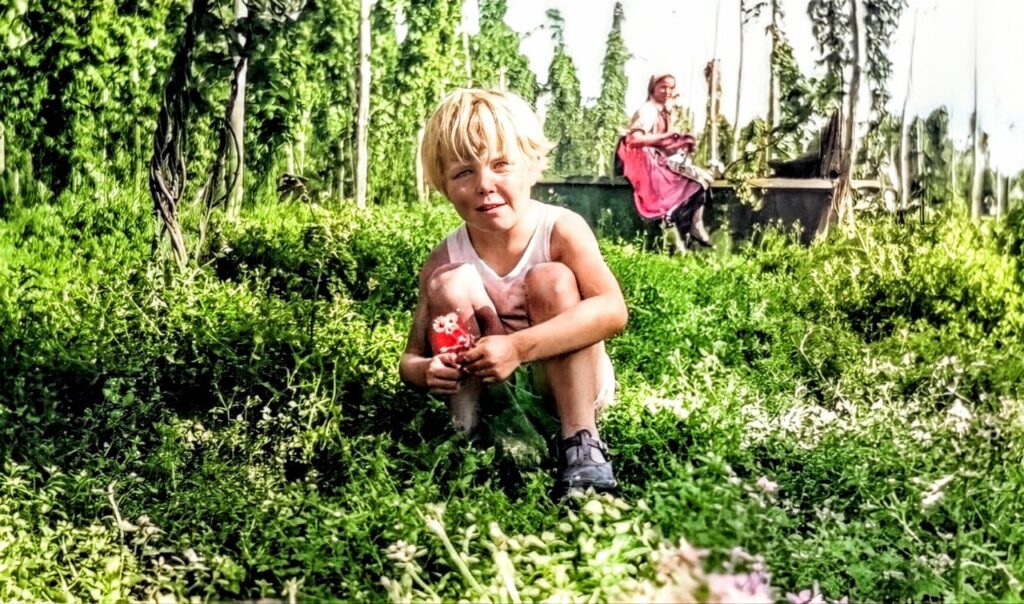
Children dashed off eagerly to find their friends for the day’s new adventures. They scooped up tiddlers with jam jars tied to string, dipping into the ditches along the field’s edge. They picked ripe blackberries, their fingers and faces stained with dark juice—a telling mark of their adventures.
They gathered chamomile daisies flourishing throughout the hop fields, their pungent fragrance and delicate feathery leaves filling the air. They swung from weathered wooden farm gates and hitched rides on tractor-trailers, without the drivers noticing.
They climbed trees, and when the ice cream van’s chimes echoed across the field, they raced back to their parents, begging for pennies to buy a treat.
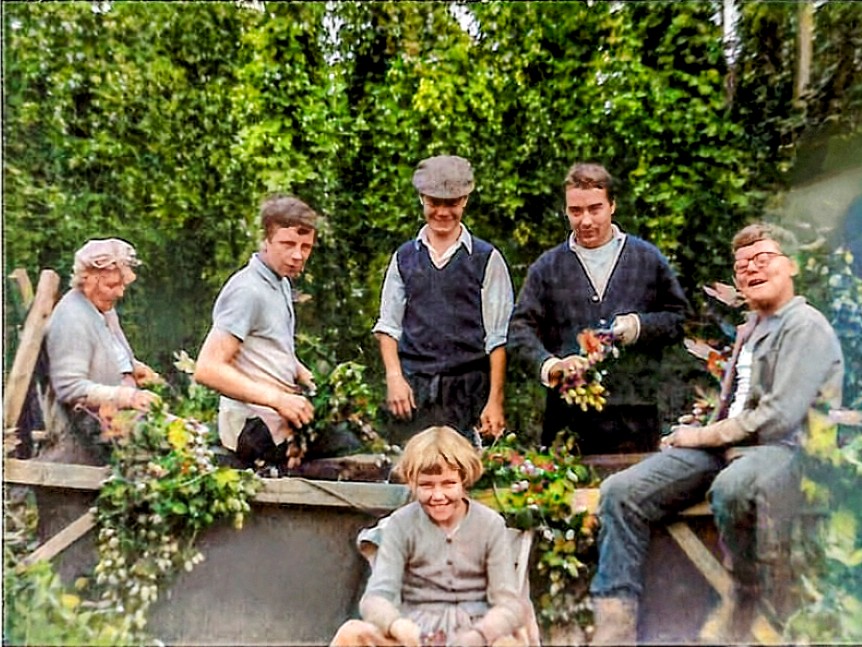
Singing often filled the fields, and as one voice began, another would take it up until the whole field was alive with joyful voices. People would chat to their neighbour on the next bin, and laughter drifted over the fields. As evening approached, the measurer would call out “Pull no more bines,” which signalled it was time to finish picking hops from the bine that you had but not to pull any more.
On weekends, the men who had stayed at home and worked throughout the week came down to spend time with their families. Saturday nights and Sunday lunchtimes became special moments when everyone gathered at the local pub to reconnect with friends and neighbours.
Singing played a vital role in these gatherings, where individuals performed their favourite ‘party pieces’ while others eagerly joined in. Local travellers contributed their unique traditional songs, enchanting everyone with their distinctiveness. These songs often conveyed stories filled with meaningful lessons and a sprinkle of humour.
The Importance of Hop-Picking
Hop-picking was much more than a way to earn money. For many London families, it offered a crucial escape from the city’s chaos, providing fresh air, freedom, and a rare opportunity to unwind. For some, hop-picking was their sole holiday of the year.
Although the tradition has faded with the advent of mechanised harvesting, the memories endure—cherished across generations with warmth, humour, and a profound sense of belonging and nostalgia.
If you spoke to someone who spent their childhood ‘hopping,’ they would describe the experience as magical and reveal how those cherished memories have stayed with them throughout their lives.
Your Own Memories
I would love to gather your memories, stories, and photographs to create a ‘Hopping Memories’ book. With your permission, we could publish it and donate any proceeds to a worthy charity, possibly one based in Kent.
You can share your story or memory by using the contact form available through this link <Contact Susan>
If you wish to include a photo, please mention it in your message, and we will provide you with a secure email address for private submission.